
The end of a 10-year relationship
Last year, I did what everyone tries to do after a relationship ends: make sense.

Greetings from Barcelona everyone—
I’ve been feeling pretty overwhelmed over the past few weeks and as usual, the proximate cause is that I’m trying to do too many things at once. The renovation, my consulting work, parenting, climbing, two hours of Spanish class every morning, and adjusting to living abroad—it’s feeling like a lot.
Thus, the next few weeks I’m going to tee up some posts that have been sitting in my draft folder for a long time, which I haven’t published for one reason or another.
The first below is something I wrote nearly a year and a half ago, in the immediate aftermath of the breakup with my partner of 10 years. With some distance, I’m ready to share, in part because I almost never see good writing about this subject, and also because what I wrote then still feels accurate and true to what happened and how I feel about it.
Maybe it will be some small help to others trying to make sense of a similar experience.
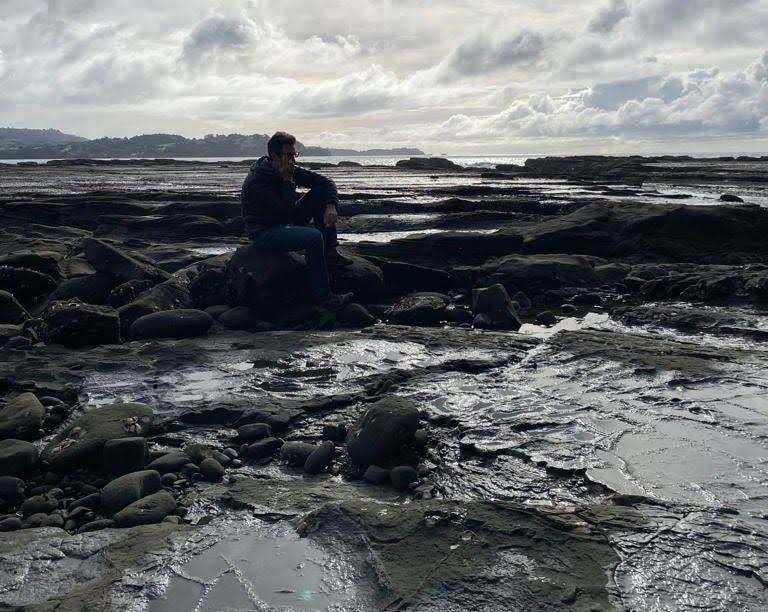
Sense-making after a relationship ends
I wrote this a year and a half ago. As a reminder, putting it all in a block quote:
I’m single again.
I’m not gonna tell the story. There will be no details, and I’m not going to explain here what happened.
And yet understanding what happened is a lot of what I’ve been doing in the months since it ended. I am deeply sad and in mourning for the loss, besides a few other emotions. Yet the overriding thing when I step back from myself and observe is that my sense-making apparatus is in high gear.
When relationships end, we try to tell ourselves the story of what happened and why. We negotiate that shared narrative with our ex, or not, and then we revise and iterate until the story feels right, feels True. Or, we decide to care less about Truth and instead look for a story that serves our emotional needs or advances our purposes. Perhaps we search for a story that allows us to move on.
For my part: I like to think I’m searching for what is True.
But it is hard.
Quite often a couple cannot agree on what happened, and this becomes the source of much pain and hurt and resentment. Or, they agree on some parts and not others. Or they agree in broad strokes but not on specifics, or on specifics but not about what they mean on the whole.
The temptation is always to grasp on to your version for all it’s worth and make it the version, and fault the other for their deviation, their refusal to see things the way you see them.
A breakup will go much smoother if, when this happens, you agree to disagree. Even better, respect that the other person is legitimately doing the same for themselves: doing what they can to make sense of it all.
Sometimes, we are still processing what happened, even if the other person thinks they know already. Not everyone knows exactly why they feel the way they do at the moment when the other demands an explanation.
All we can really say is that there are immediate causes and proximate events, influences, insights, and minor epiphanies. Sometimes the passage of time clarifies those influences and events, or puts them in a new light. Then, we continue to reach for a True accounting as long as we have the energy to do so.
Looking back on my life, sometimes I can remember the cause of breakups, and other times not. Perhaps my memory has shielded me from too many painful details; all I remember are the emotions. But do the emotions help form the story, or does the story form the emotions—or is it a mutual influencing? Am I hurt because of what happened, or am I deciding what happened because I am hurt?
Again, I’m looking for the Truth. But it’s hard to find. If you are friends with a couple that is breaking up—that is, you are on the outside of a breakup looking in—perhaps all you can do is respect how hard it is to write the what happened story. Take sides, sure, give emotional support, yes. But understand that you do not and will never know everything, because even they don’t know everything. Maybe you’ve even engaged in a little sense-making yourself, anchored by your own biases toward making events fit a narrative.
But I digress. I’ve been writing this newsletter for three years, and I’ve always taken pains in these pages to protect my relationship. I don’t write about grievances or unpack past fights. If I’ve ever had a question as to whether this is something I can make public, I have checked first and given her veto power—as I’ve done with this piece.
I wasn’t perfect the past 10 years and neither was she, but together we agree at least on this: we were good partners to each other. We both protected our relationship. We have helped raise each other’s kids. We have been there for each other through sickness and pain and much more. We helped each other move through the world and deal with all of its difficulties, and we loved and supported each other as best as we knew how. We were not a perfect couple, but we were better and stronger and more at peace than most.
I am grateful to her for every one of the past 10 years.
And yet. Like any couple who are being honest with themselves, we also have fundamental disagreements, and these disagreements are long-standing.
Relationships are a delicate thing. A friend who I spoke to recently described relationships as a series of scales and balances which are all precariously aligned in fragile harmony so that the two people stay together, and keep choosing to stay together. But sometimes, if just one of those scales is upset, if just one of the many parts becomes out of balance, the whole architecture of the relationship no longer works.
I think this is what happened to us. It’s the truest thing I can say that happened. Even if my emotional needs would be better served by hating her (I don’t) or blaming her (how could I?), perhaps the only thing I can really say is that our disagreements became salient enough such that the balance and architecture of the relationship collapsed, and quite suddenly.
Beyond that, whatever story we tell ourselves about what happened is ours to keep, and edit or revise as time goes on, in ways that work for us, in ways that help us stay whole and move forward—hopefully with as little guilt, anger, hurt, or resentment as possible.
An honest introspection that addresses the delicate nature of all intimate relationships. I appreciate you sharing this.
As for everything else, it IS a LOT. A crazy lot. And yet, of course you took it on. (I do the same) This is how we create our lives, from the future perfect. In the present, it can be overwhelming. Your level of awareness will help you adjust and find a new equilibrium with your vision and determination. It’s more than okay to take time off from Post Nomad (- in case you need to hear that. ) This holiday season is going to stay with your son for his entire life.
Perhaps when the time is right, you might share an insight into his experience as a first time young transplant into a new culture during the holiday season How does he integrate this into his sense of home? I suspect this introspection is already part of your conversations, as Im sure he’s learning from you how to pay attention to his own truth.
You know this and I’ll say it anyway: focus on what’s important right now in this moment. Your readers will still be here and our experience together will be better for it.
Happy Holidays, Russell. I was in Barcelona for Christmas and new years back in 1997 and it was, well, quite wonderful. All the best to you and your son, Jan
I had a relationship break down almost 6 months ago. For some reason the mourning of it being over is much more heart-wrenching now than it was in the beginning. It’s a weird place to be because it goes against the conventional wisdom that time heals all wounds. This is what I am struggling to make sense of now.
Thank you for writing this, Russell.