
Big renovation update
There may come a day when I abandon the project—but it is not this day

I.
I once saw a post, I think it was on a “Renovating Spain” Facebook group, from a woman who wanted to give some advice after long years of struggling through a project somewhere in the countryside.
If I could find it now, I would share, but as it’s been lost to memory, I will attempt to paraphrase:
The regulations are too byzantine; the contractors too unreliable; the general environment and materials difficult; the language a barrier, the culture a barrier; costs spiral upwards, no end in sight. If you can save yourself years of headache, heartache, stress, and trouble, do yourself a favor and skip it all.
And so my advice on a renovation is this: do not do a renovation!
Many months have gone by in which I thought I might write my own version of this post. This is how my mind works, always writing in the background. My mom says her brain often defaults to choreographing dance moves in her head; mine defaults to writing scenes, choosing phrases, crafting headlines.
This imaginary post would be titled, “The disaster renovation project has finally defeated me,” or perhaps “The beautiful failure of my renovation project in the Spanish countryside.”
You see these kinds of mea culpa posts. They are formulaic (as is so much on Substack these days). The article would write itself. A litany of delays and a catalogue of missteps, followed by all the lessons I’ve learned along the way. Cue a defeated author walking into the sunset, defeated perhaps, but nonetheless grateful for the journey.
There may yet come a day when I write that post. But it is not this day!

II.
Instead: the past year has been a frustrating lesson in waiting.
After months of demolition, then a work stoppage resulting from a complaint by my neighbor, I waited eight months for the town to give me a permit just to be able to replace the roof and construct a rooftop terrace.
The process was particularly frustrating because, as I waited for a permit, it seemed all of Spain was complaining of a severe cost of housing crisis. Yet rather than speed up the process for building permits or making it easier to get one, the only solution of interest seemed to be imposing rent controls on existing owners.
In any case, I was kicking myself. Before the neighbor complained and the town architect forbade me from continuing, I had received some local advice that I should just start the work sans permit and try to keep it quiet, as many in Spain do. Especially if it’s a rural property, paying a fine for work completed without a permit is often cheaper and faster than going through the official process.
In retrospect, I should have disregarded the advice and applied for the permit upfront. First major lesson learned. I should have known there was no “quiet” way to do a roof replacement in the middle of the town surrounded by neighbors.
On top of this, when the permit finally did come through (in June last year), I promptly had a falling out with the Reus construction company that had bid to do the work. The issue was that I had crossed out a few of the line items from their budget, which I regarded as unnecessarily frivolous.
I was already bought into paying someone for the roof replacement, rather than doing the work myself—especially considering the permit’s requirement for a builder with insurance and a safety plan. But from a total cost of 35,000 euros, I had crossed out about 7,500. One example: I was happy to re-afix the old Catalan roof tiles myself.
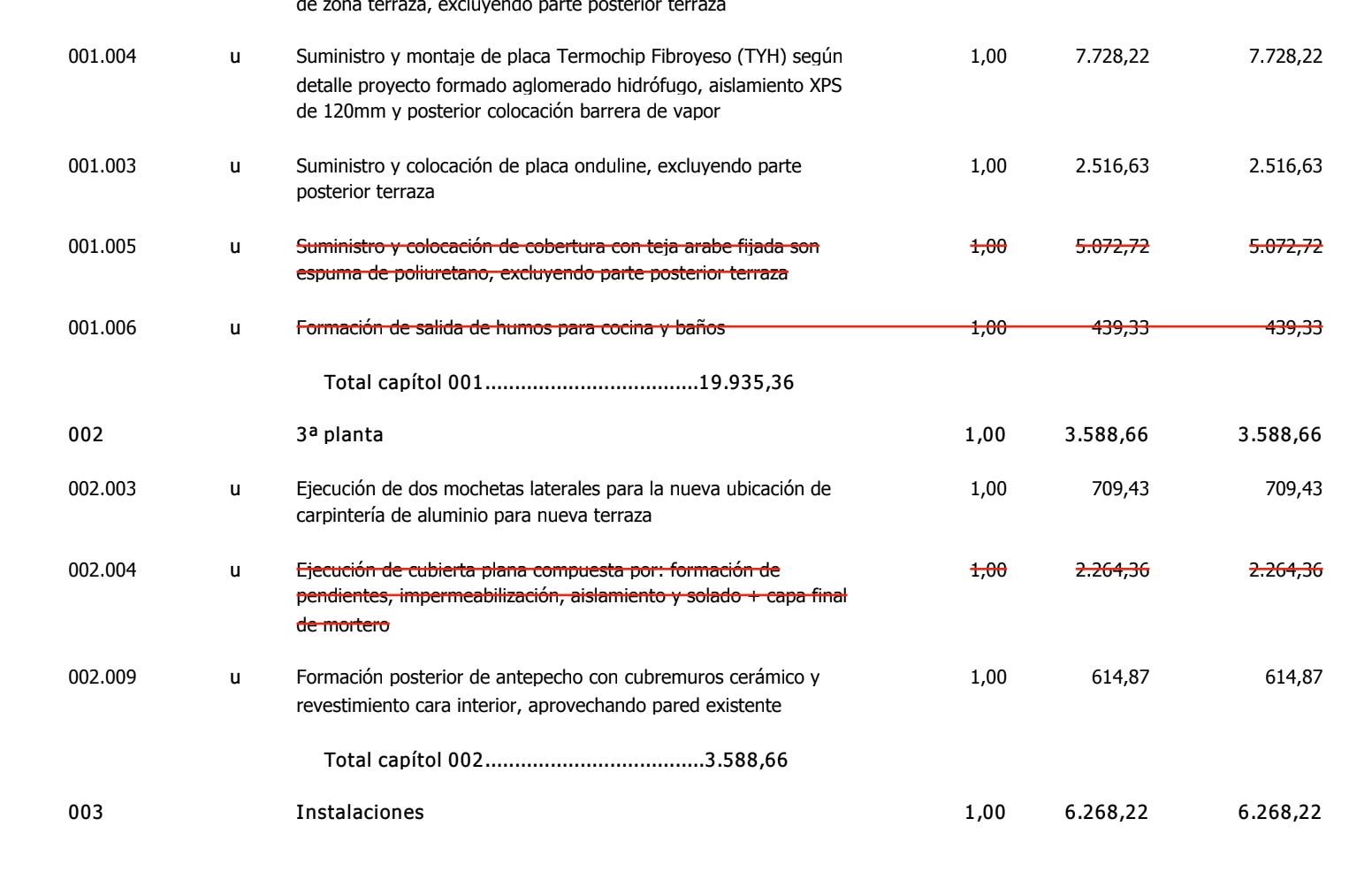
When I sent the red-lined budget along with my approval to start work at their earliest convenience, I received a message back from the project manager: they would either do the whole thing or none of it.
I promptly started searching for another option.
III.
The builder I ultimately hired came through a recommendation from my other neighbor, who owned the building supply company in town. It was his company that had come with the little forklifts to haul away ten gigantic waste disposal bags I’d filled with broken concrete and brick from demolition.
Over the course of the few months I’d been working, he’d been nothing but friendly and understanding of all the noisy work. Even when his young kids were napping. Over the holidays, he had gifted me the standard: wine and olive oil pressed from the family land.
He recommended a builder who lived down the street (Another lesson learned: I should have asked him first for someone local, rather than rely on builders from forty minutes away).
In July, the new builder came to walk through the property with me. He was excited to work on a project so close to home. But there was a long road ahead. I wrote last month about what came next:
…a death in the family; supply delays; the rainiest January in a quarter century. But many weeks had now passed with beautiful weather and no obvious holdups, and still, for some reason obscure to me, no work done.
By March, it’d been five months since I’d sent him a deposit, and I still had virtually nothing to show for it aside from a stack of roof panels arrived from the supplier.
I’d been getting a lot of advice on how to manage the situation, especially from two Catalan friends. They were literally reviewing text messages and scripts for voice notes before I sent them. At times, they told me I needed to be more angry, that I needed to “show my character,” or nothing would get done. Other times, they reined in my frustration—that’s too fuerte, one told me.
I went through phases of feeling completely disconnected from the project. I contemplated trying to sell it and buy a van. I would just swallow all the losses and chalk it up to a learning experience. I started writing the scenes in my head.
This was all foreign to me. Not just the culture and the language, but the very idea of needing to continually monitor someone lest work not get done.
I’ve always been a terrible project manager. The whole idea of project management has always felt odd to me. Why should I look over someone’s shoulder and babysit their time for them? I’m a solopreneur for a reason—I don’t like managing people, and I don’t need to be managed myself.
IV.
When I met with the builder in March, he was even more nervous about the meeting than me. We talked about everything that happened. Reasons for the delays. Progress that could have been made, but wasn’t. I suggested—more than once—that I would have to find another path forward if he didn’t start soon.
He couldn’t tell me a precise start date, but he did promise an end date: el Dia de Sant Jordi, the 23rd of April, the holiday for the patron saint of Catalunya. The tradition is for couples to exchange books and roses.
It was a self-imposed deadline. I accepted, and we shook hands. Entonces, tenemos un acuerdo, I said, looking him in the eye—so we have an agreement. Sí, he replied. Tenemos un acuerdo.
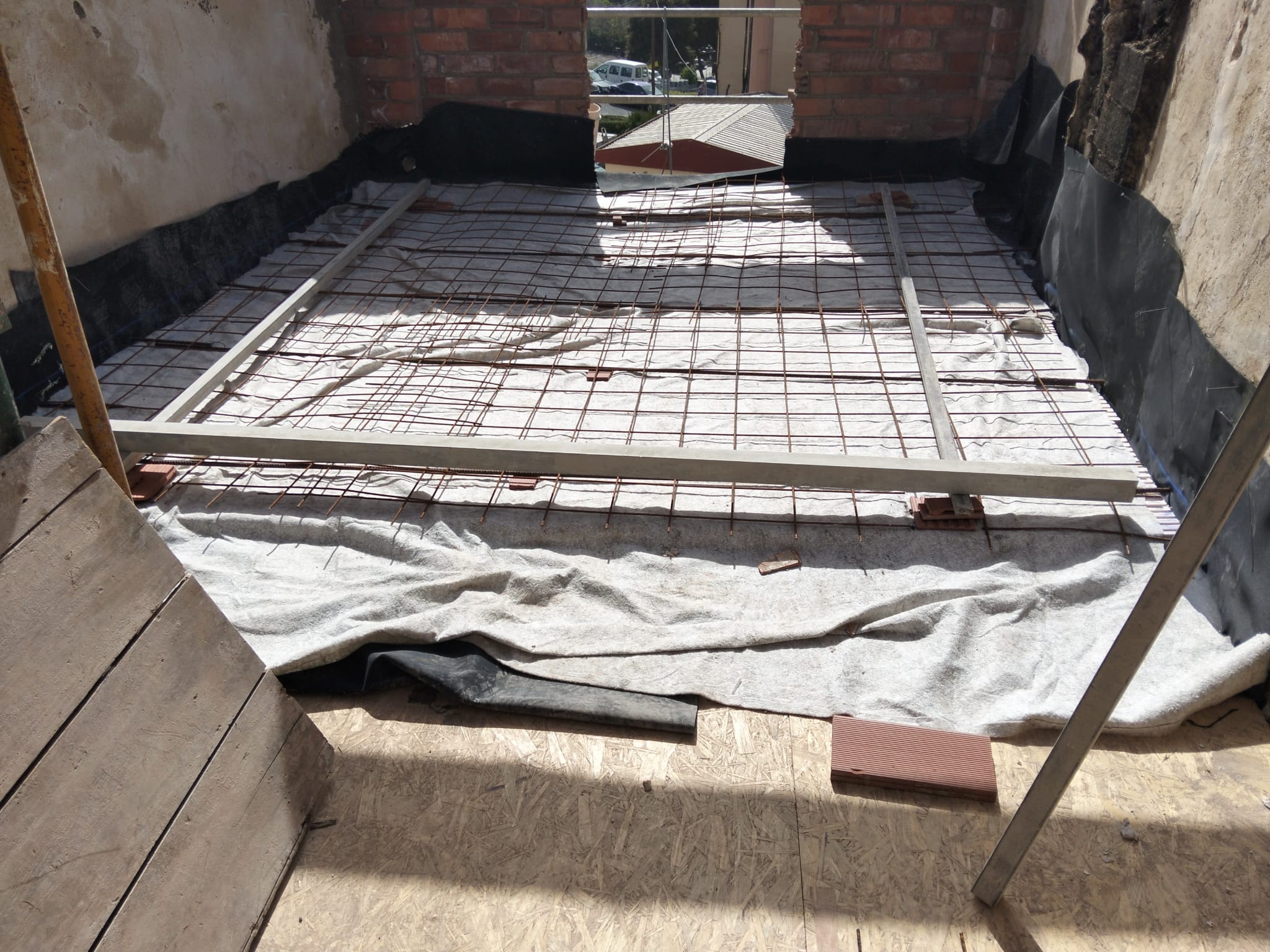
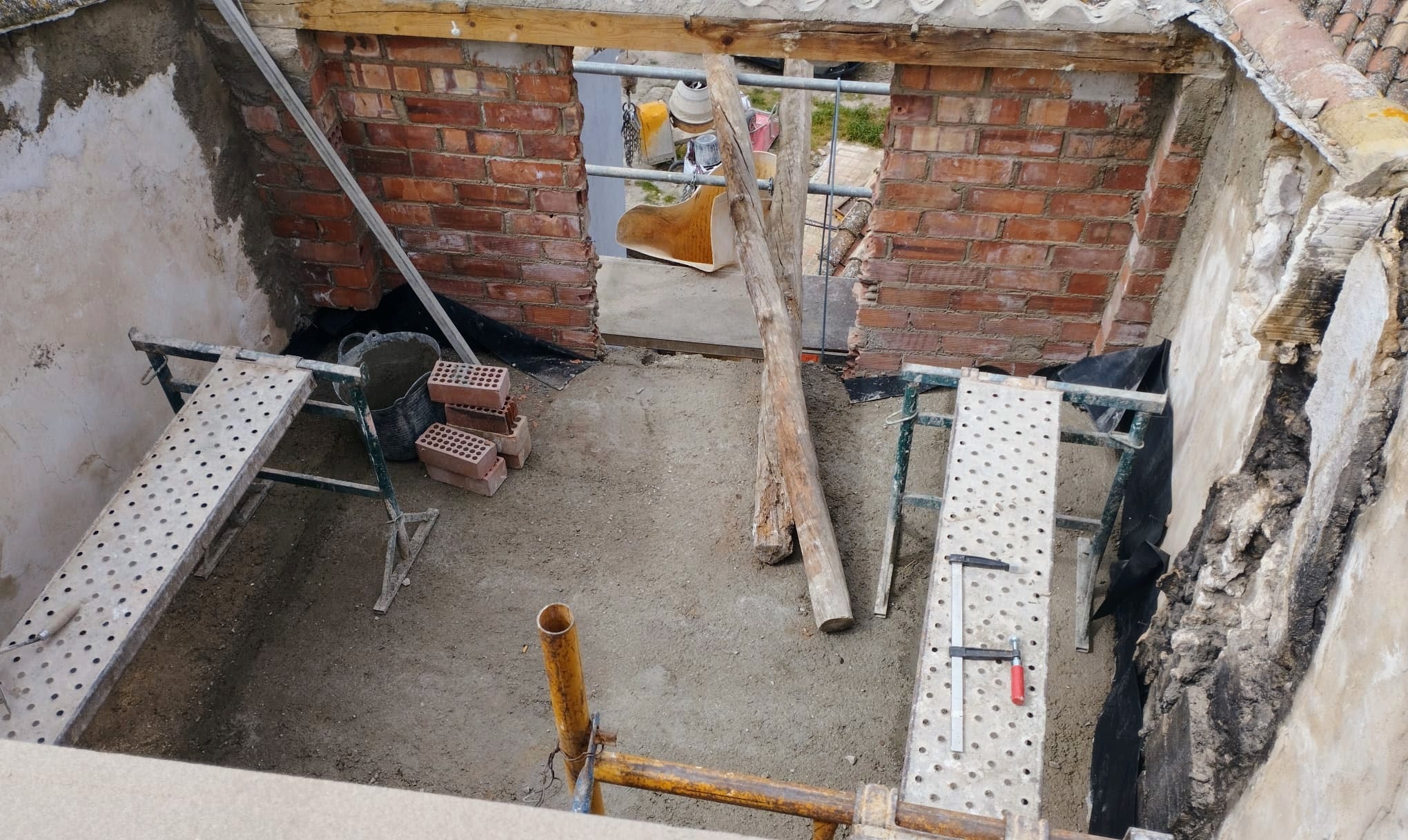
And then, miraculously, work began. He started sending me photos. A pile of rubble. A hole in the brick wall to move in supplies. Rebar down on the terrace. A new hole in the roof. Sunlight, air, space, progress.
I met with him again two weeks later. Estoy super contento, I said. I’m very happy.
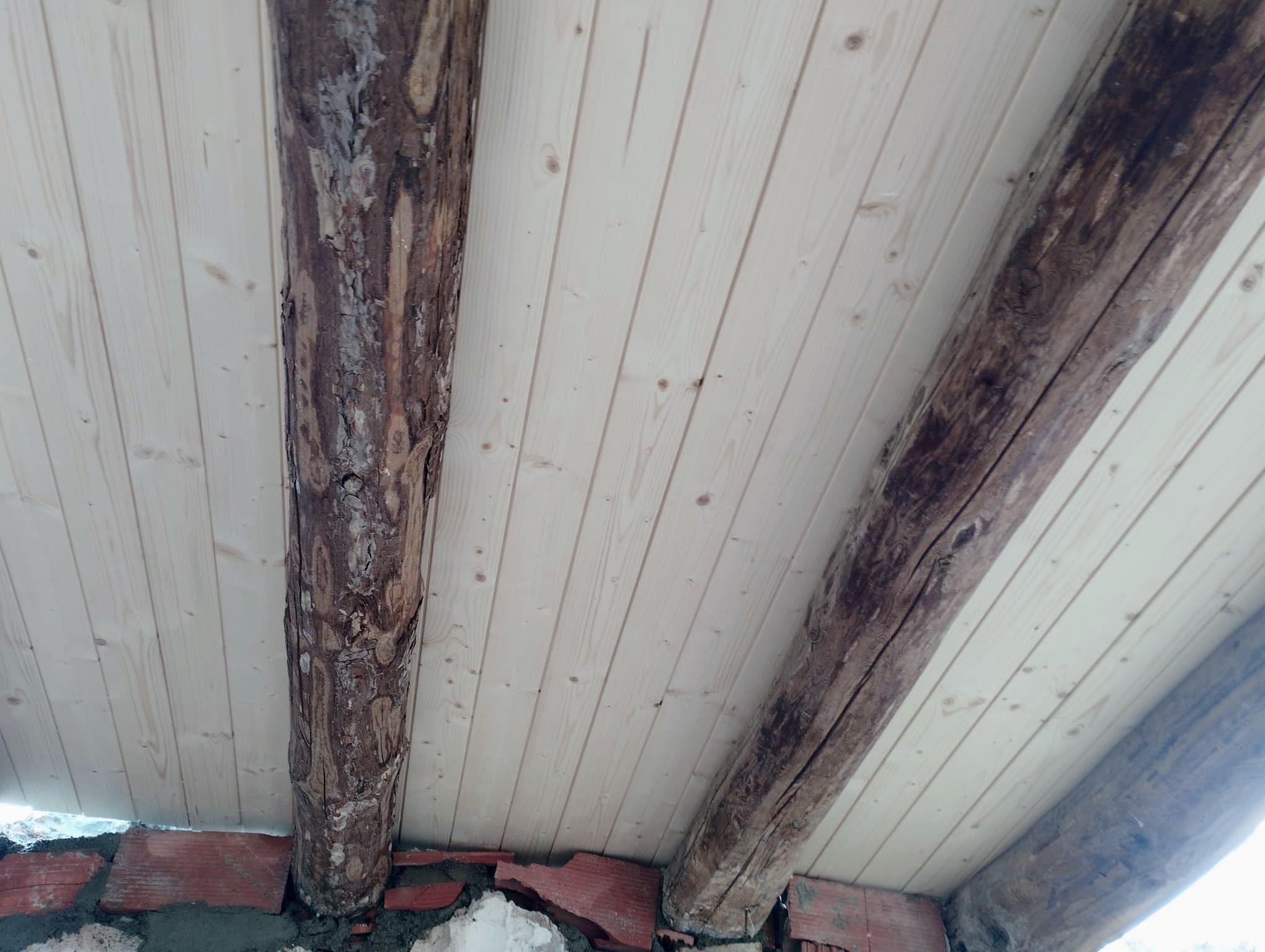
Work was now speeding forward. The asbestos panels were gone and properly disposed of. Half the roof was down. The new insulated “sandwich” panels were going up. We climbed the scaffolding to inspect the roof from above, and discussed what kind of railing would go on the balcony.
I was trying to work on my project management: I asked about next steps, materials, logistics, milestones.
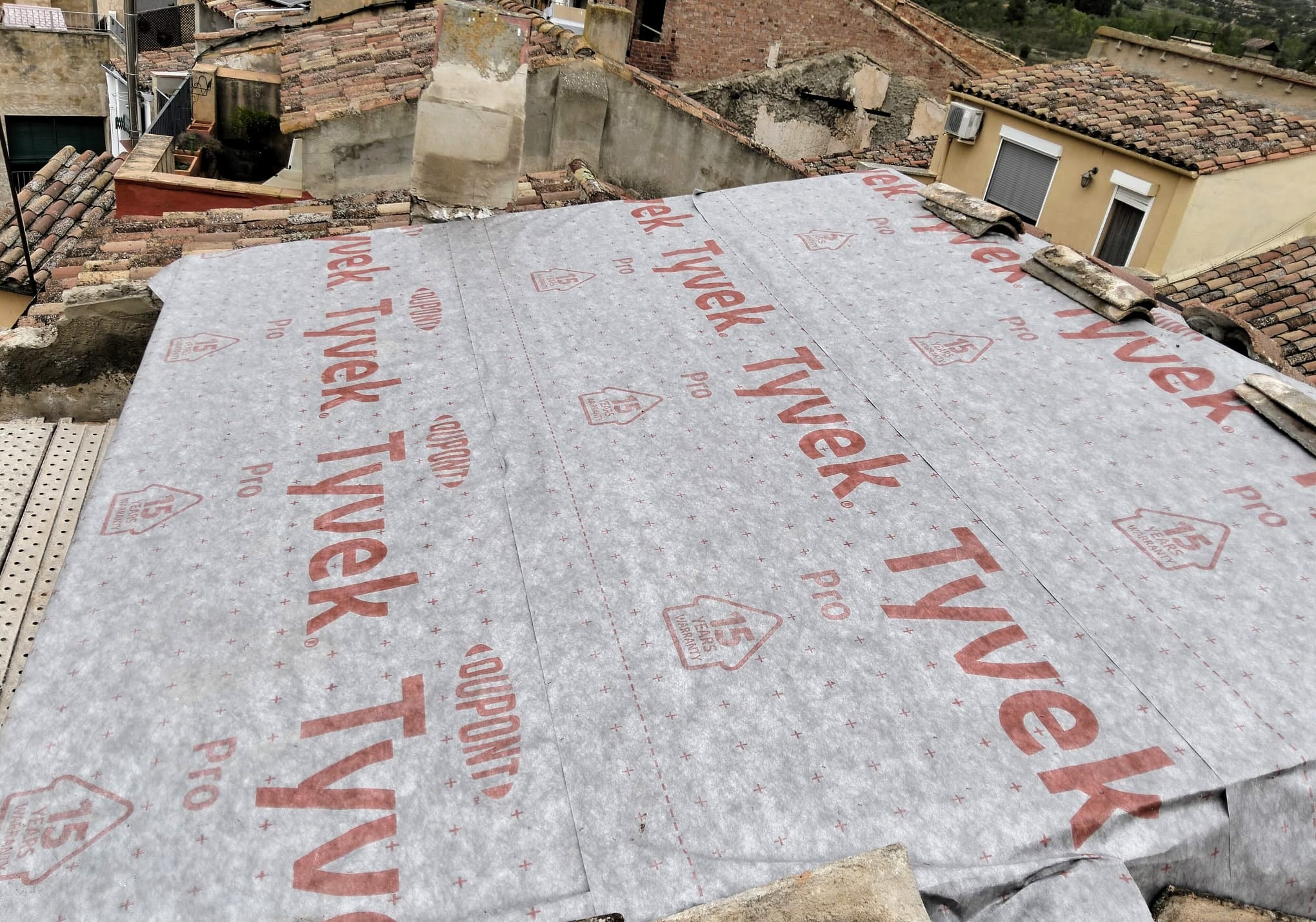
A few days later, he sent more photos. Sandwich panels up, cement poured, Tyvek wrapping placed. It was a lot of progress.
V.
For months, it seems there has been nothing to report, so why write?
And the work is still not done, the deadline not yet met.
But I do what I can to avoid being formulaic (It was hard, but I persevered, and now it’s finished!). Part of doing that is writing while still in progress, while questions still don’t have answers, and where my feelings are still unresolved.
I’m not sure what will become of all this. In many ways, my life has moved on from my beautiful, difficult, romantic renovation project in the small town in the countryside. Should I re-engage? What new roadblocks, delays, and stresses would I be courting? What do I really want out of this project now, years after I first launched it, and after so much delay? And always: why?
These are the questions I’m pondering these days, a week out from Dia de Sant Jordi.
I’d also been wondering about your rooftop, so happy to read this non-formulaic update. Four months ago I purchased a tiny house in Portugal to renovate, and have spent four months listening to warnings and tales of woe from many countries. Work began one month ago, and it’s moving right along. No complaints.
I’m glad you posted an update! I’ve been wondering how this was going. I find this project fascinating. I’m no climber but I do appreciate people that dream of creating communities, make plans and put down roots. Keep on keeping on