

Some years ago, during the Obama era, I wrote a screenplay about a zombie apocalypse that the U.S. had managed to escape. We start in a fortress America that lives in a kind of peaceful, near-future stasis, albeit with heavily policed walls across both borders. Universal basic income has been instituted; the country is self-reliant, and our characters go about their lives with little concern for what has befallen everyone unlucky enough to be outside its walls, where the world has descended into the kind of anarchist, violent, zombie fare we know well from other films.
The catch—my whole take on the zombie apocalypse genre—was that the people in the U.S. are actually trying to escape into the infected zone. The guards on the walls mainly try to catch smugglers looking to ferry people out of the country, rather than sneak them in.
Embedded in the screenplay was a theory of modern life that it had become so purposeless, devoid of meaning, boring, and bureaucratized, that a certain minority segment of humanity would rather strike out for adventure and uncertainty, even if it meant high risk of death.
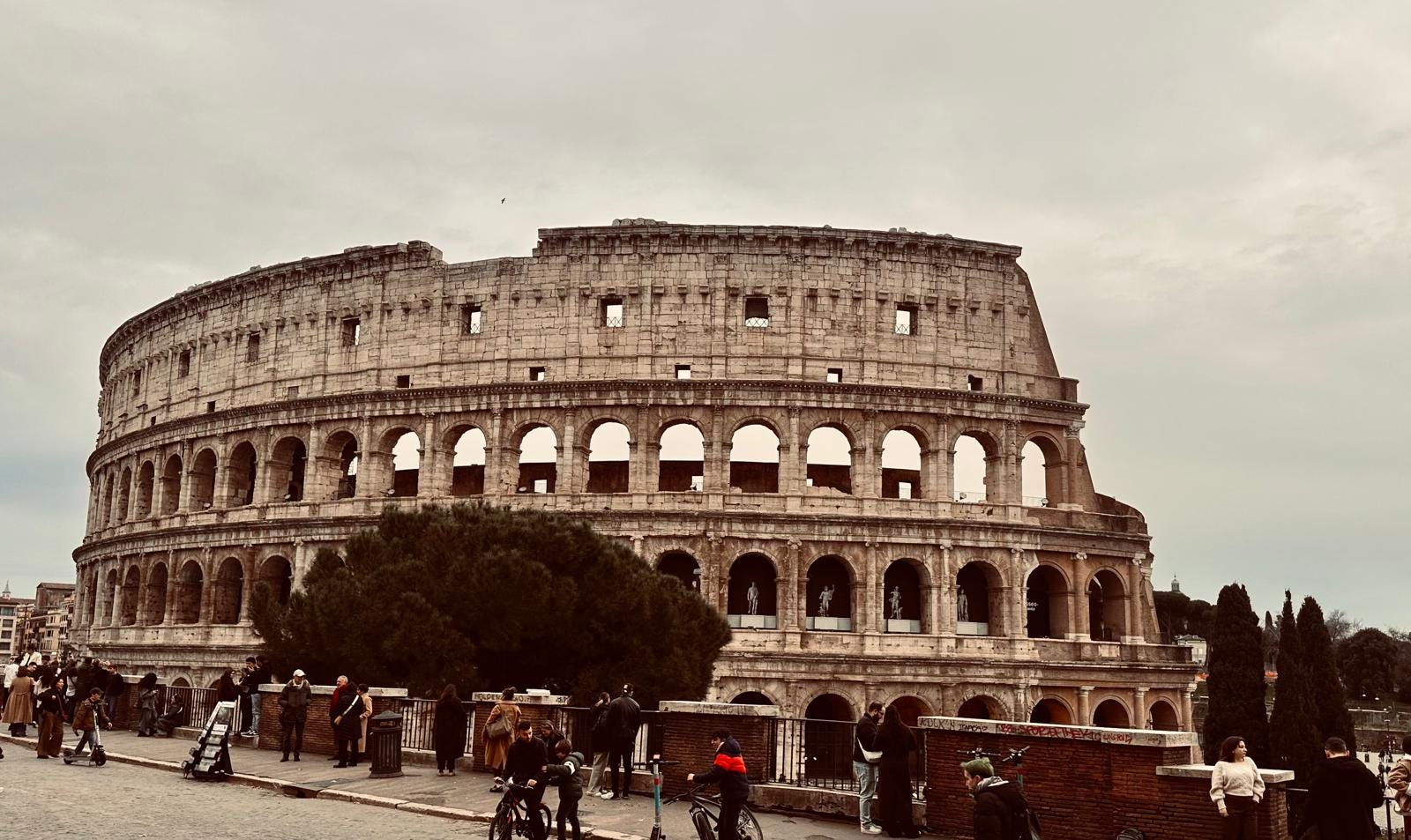
The world seemed more boring then. Perhaps I was prone to romanticizing escape from mundanity. Today, as I travel through Rome with my son, the mundane seems good. We like to sit at cafes and play rummy for hours, while I drink a beer and he a lemonade. And in the in-between moments, we hold our breath, wondering what world order-shattering event we’re likely to witness next (I confess I didn’t have “possible war with Denmark” on my bingo card).
But of course, many of us really do live in the sanitized, boring, bureaucratized world of my screenplay. And the crisis of meaning I wrote about—the search for some higher purpose, be it adventure, activism, or (increasingly among young leftists I know) even revolution—is still very much with us.
Since childhood, I’ve always been fascinated with explorers, escapists, the ones setting out from comfortable homes into risky unknowns: the Amundsons, the Mallorys, the Magellans. I think of the famous advertisement published in a newspaper to recruit sailors to Shackleton’s mission to the Antarctic (even if its authenticity is debated):
Men wanted for hazardous journey. Small wages, bitter cold, long months of complete darkness, constant danger, safe return doubtful. Honor and recognition in case of success.
I’ve never quite seen myself in these explorers; I would have been the journalist covering their exploits, the writer trying to make sense of it all—but still my heart flutters when I read something like that.
Some of these men were ruthless egomaniacs. Many left their families for years, wives to care for the children alone, with indefinite hope of return. Some go down in history as murdererous colonizers; others, as exemplars of leadership in difficult times.
Regardless of history’s judgment, though, what gets me about these stories is the emotional uncertainty of it all. Polar explorers used to set off from home, anticipating they would be gone for years, with no certainty of return, and no means of communicating progress to loved ones back home. Today, we want text replies within 24 hours. Back then, I imagine the wives, figuring out what to tell the kids: Don’t worry, your father will be home one day, maybe. Date: unknown. Condition: unknown.
It’s the same emotional gut punch that hits me in Interstellar, when Coop drives off in the truck on an uncertain mission to save the world, leaving behind his two kids on the farm, to be raised by their grandfather, date of return: again unknown. That shot of Matthew McConaughey holding back tears on the dirt road, his daughter Murph running after him in the background…. Gets me every time.
This crossing over from safety and status quo to risk and uncertainty is what I’m interested in. This was the contrast I set up in my zombie apocalypse script: on one side of the wall, boring modernity; on the other, uncertain adventure and risk of death. Safe return doubtful.
I was on a trip through the Sierra Nevada once, driving with my son, dad, and step-brother. The four of us went from charging station to charging station in my step-brother’s nicely air-conditioned Tesla, fishing gear packed into every nook and cranny, and my son, 10 years old at the time, taking every opportunity to play with the Tesla’s onboard music system. Every night, my father and step-brother called their wives to recount the journey thus far, filling them in on the details of where we had lunch, what we saw, and where we’d be going the next day.
This week, I’ve been travelling around Italy for a brief holiday just with my son, who is now 15. I wouldn’t call it an adventure of any kind—just new.
Yesterday, we walked by an Internet cafe in Naples, and I was reminded of when my friend Francis and I bummed around northern India after grad school, no phones, stopping into an occasional Internet cafe only long enough to plan the next segment of the trip and notify loved ones that we were still alive. At one point, I stayed an extra night in Udaipur while he forged ahead to the next city—there was no way to reconnect other than to trust our plan for a rendezvous hundreds of miles away the next evening.
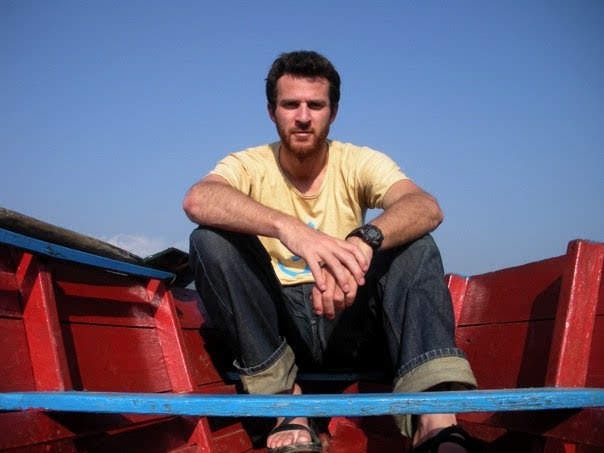
After Francis returned to the UK, I went on to Nepal, where I rented a motorcycle (I’d never ridden a motorcycle in my life) and drove up and around the chaotic dirt roads surrounding Pokhara. At one point, I stalled the motorcycle in the middle of an intersection in the mountains, sheepishly dismounting and wheeling the bike to the side while dozens of vehicles whirled around me. By the time I’d found my way back to town, I’d popped a flat tire, with absolutely no means or knowledge to fix it. I returned the bike to the rental shop, paid a few hundred extra Nepalese rupees for the damage, and embarrassingly walked away. I suppose this is the silliest, riskiest thing I can think of from my youthful adventures.
Last night, as my son and I walked the streets of Rome, he told me he was still thinking about the movie Don’t Look Up, which he’d watched on the airplane.
How could everyone be so clueless? he wondered. There’s literally an asteroid headed for Earth about to kill everyone on the planet, and all they can think about is how to make money from it!
Or boost ratings, get a bounce in the polls, or get laid. Don’t Look Up was originally written as a metaphor for climate change, but ended up being released right around the pandemic. It was the closest we’ve gotten to zombie apocalypse territory in my lifetime.
The truth is that most of us who read Substacks are ridiculously wealthy and safe by historical standards—and also that modern society could use a little more adventure, a little more tolerance for risk. I’m the kind of person who thinks we should still fund space exploration, and if someone objects, But what about the people on Earth! I respond that they, too, need something to believe in, and that includes an astronaut reaching for the stars.1
As I get older, I don’t want to escape over the wall; just nudge us ever so slightly in the direction of boldness. My hope is that the revolutionaries don’t actually do a revolution—I hope that their imaginations are sufficiently satiated with the idea of it to not reach for guns or bombs.
In Naples, my son asked if I supported Catalan independence. I told him I was like the patriot in the Mel Gibson American revolution movie. Do I think the colonies can and should govern themselves? Yes. But am I willing to go to war for that? Most certainly not:
It’s not a great movie (though anything with Heath Ledger…), but this scene has stuck with me. Strong as we might believe our principles to be, we are generally not faced with a decision about whether to take up arms against tyranny, but at the risk of endangering our homes and the lives of our children. Even those who are choosing not to have children seem to have a general risk-aversion at least partly in mind.
In A Tale of Two Cities, Dickens writes that the revolution stemmed from unbearable tyranny, from abject poverty, from oppression, and dehumanization by the elite. I came away from that book in my high school freshman English class thinking revolutions happen because people have nothing left to lose.
But that’s not quite right. Revolutions can also happen when a small minority hijack enough of the mechanisms of power to kickstart the violence—and then everyone else must pick a side. I don’t think most Catalans would choose to go to war over their cause—but there is also a small, vocal minority who might be willing to.
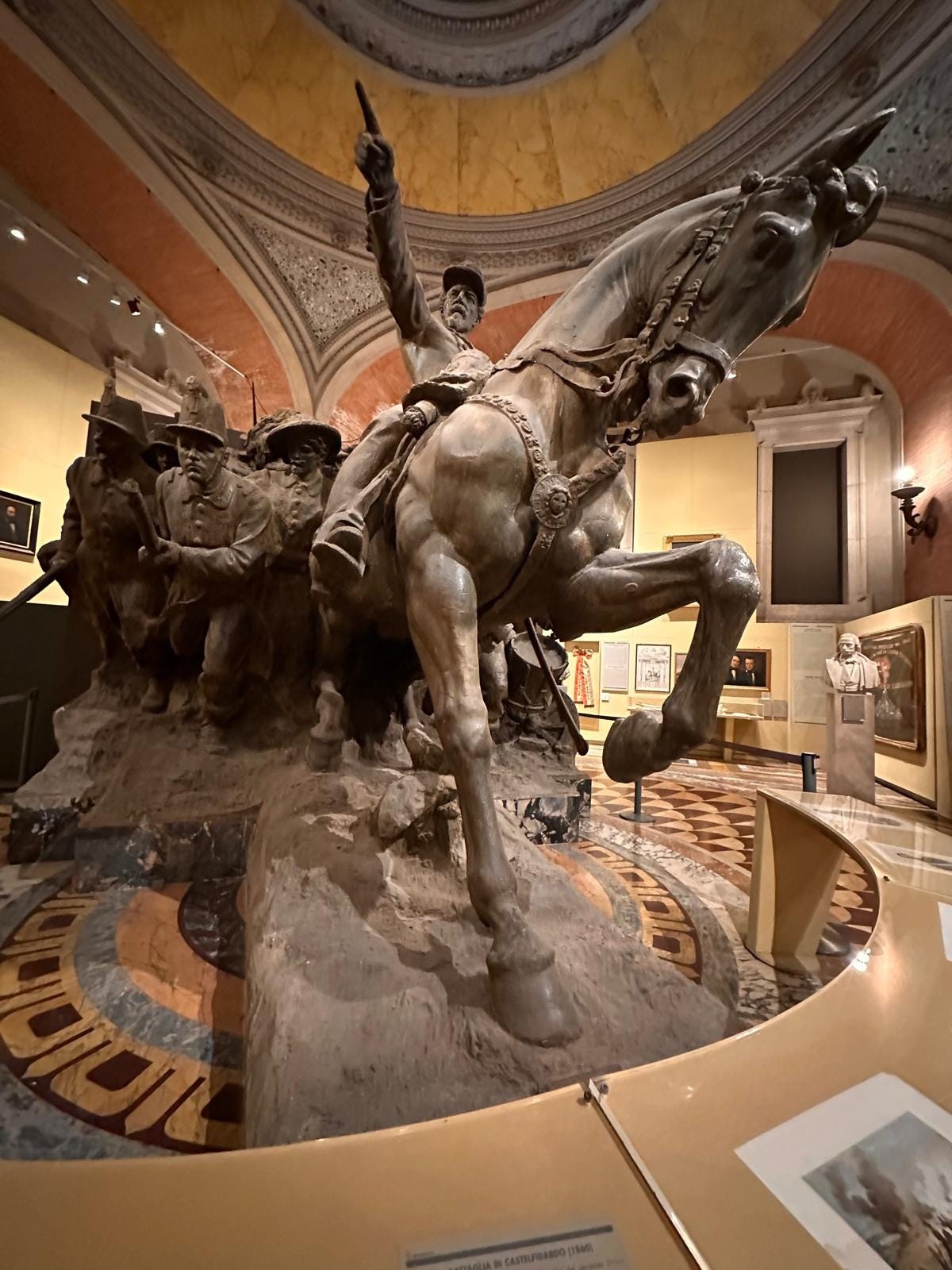
As I wrote last month, late-stage capitalism has a nice, easy decadence to it that I think most are loath to give up. The only problem is when the wrong group of individuals takes Margaret Mead’s words to heart:
Never doubt that a small group of thoughtful, committed citizens can change the world. Indeed, it is the only thing that ever has.
This was a nice rallying cry in the Obama days, because we assumed the small group of citizens was pressing for change on behalf of causes we agreed with: justice, human rights. But of course, these aren’t the only small groups of thoughtful, committed people in the world. I know a few in the White House right now, just as committed to change, just not the kind I want.
It’s almost enough to stick up and defend the status quo—and perhaps not launch ourselves full bore into a zombie apocalypse. Or at least make peace with a certain bureaucratized decadence.
I used to think the world was boring enough to want to escape. Now, I’m quite content to live with the status quo, things being as they are. Playing cards at the cafes, drinking my beer, chatting with my son about movies.
On a related note, I want to recommend Matthew Yglesias’ recent piece, Liberalism and the Search for Meaning)
Thoughtful take on how modern life's very saftey can create its own kind of restlessness. The tension betweem wanting adventure and appreciating stability is something I dunno many wrestle with, especially when comparing our sanitized routines to the genuine uncertainty past generations faced. That shift from your younger self wanting to escape the wall to now defending the status quo feels honest in a way most writing about meaning avoids.